
Lombok might be the best island in Indonesia for camping. It has a 3,726-metre volcano with a lake inside its crater, ridge walks that put you above the clouds by sunrise, beaches with nobody on them, and a dry season that runs a full seven months. Bali has none of that.
What camping in Lombok actually looks like depends on where you pitch. Some of these spots demand a guided trek and a near-freezing night at altitude. Some just need a tent, a motorbike, and enough water for the night. And three of them come with the tent already standing — canvas walls, jungle sounds, and a real bed inside.
Here are the eight worth planning a trip around.
1. Mount Rinjani crater rim — the classic
This is the camping trip most people come to Lombok for. Rinjani is Indonesia’s second-highest volcano, and the standard trek — two days and one night, or three days and two nights — puts your tent on the crater rim at 2,639 metres, a few steps from a sheer drop into the caldera and Segara Anak, the lake at the bottom of it.
You don’t carry or pitch anything yourself. Every registered trekking package includes a guide and porters who haul the tents, sleeping bags, and food up the mountain and have camp built before you arrive. The two starting points differ: the Sembalun route crosses open grassland — hotter, more exposed, but a gentler grade for the first hours — while the Senaru route climbs through dense forest. From Sembalun village, expect six to seven hours of walking to reach the rim.
Be clear-eyed about the conditions. The rim drops close to freezing before dawn, the toilets are shared camp facilities, and there are no showers. What you get in exchange is a sunrise over the caldera that most people rank as the single best moment of their Indonesia trip.
Permits are managed through Rinjani National Park’s online system check before committing to dates. The mountain closes completely in the wet season (typically January through March), and individual trails close periodically for volcanic activity.
2. Danau Segara Anak — camping beside the crater lake
If you take the three-day trek instead of two, the second night is the reward: down inside the caldera, camped on the shore of Segara Anak at around 2,000 metres. The lake is turquoise-grey, ringed by the crater walls, with Rinjani’s active cone — Gunung Barujari — rising out of the water.
A short walk from the campsite are the Aik Kalak hot springs, where trekkers soak out the previous day’s descent. It’s the kind of detail that turns a hard trek into a story you’ll still be telling in ten years. The descent from the rim to the lake is steep and rough — this is the part of the trek that tests knees more than lungs.
3. Pergasingan Hill — the overnight ridge walk
Not everyone has three days or the legs for Rinjani. Pergasingan Hill, above Sembalun village in East Lombok, is the honest alternative: a two-to-three-hour climb to a ridgeline campsite at roughly 1,700 metres.
The view is different from Rinjani’s but not lesser — from the ridge, the Sembalun valley floor spreads out below you in a grid of green and gold farm plots, with Rinjani’s east face filling the opposite horizon. Local guides and gear rental are easy to arrange in Sembalun village, and the sunrise here costs a fraction of the effort the crater rim demands.
4. Pink Beach and Tanjung Ringgit — East Lombok’s empty coast
Pink Beach — Pantai Tangsi on local maps — gets its colour from crushed red coral mixed through the sand. It sits near Tanjung Ringgit on Lombok’s remote southeastern tip, and campers pitch on the grass above the beach. On a weekday you may have the entire coastline to yourself.
There are no facilities. Bring everything — water especially — and take every piece of rubbish back out with you. The final stretch of road is rough; a scooter will make it in the dry season, but allow more time than the map suggests.
5. Pantai Seger — Mandalika’s quiet corner
Minutes from Kuta but a world quieter, Pantai Seger is the beach camping option for anyone based in South Lombok who wants a night under the stars without an expedition. Tents go up on the grassy headland above the sand. Sunrise here lights up the Mandalika coastline, and you’re back in Kuta for breakfast.
Like Pink Beach, it’s bring-your-own-everything — there’s no camp infrastructure, which is precisely why it still feels the way it does.
6. TeteBatu — camping in the rice terraces, with a real bed
The last three spots on this list are still camping — canvas tent, outdoor living, the sounds of the place all night. The difference is that the tent is a permanent safari tent on a wooden deck, and inside it is a queen bed, proper linens, and an ensuite bathroom with a hot shower. If Lombok’s outdoors appeals more than a sleeping mat does, this is the version built for you.
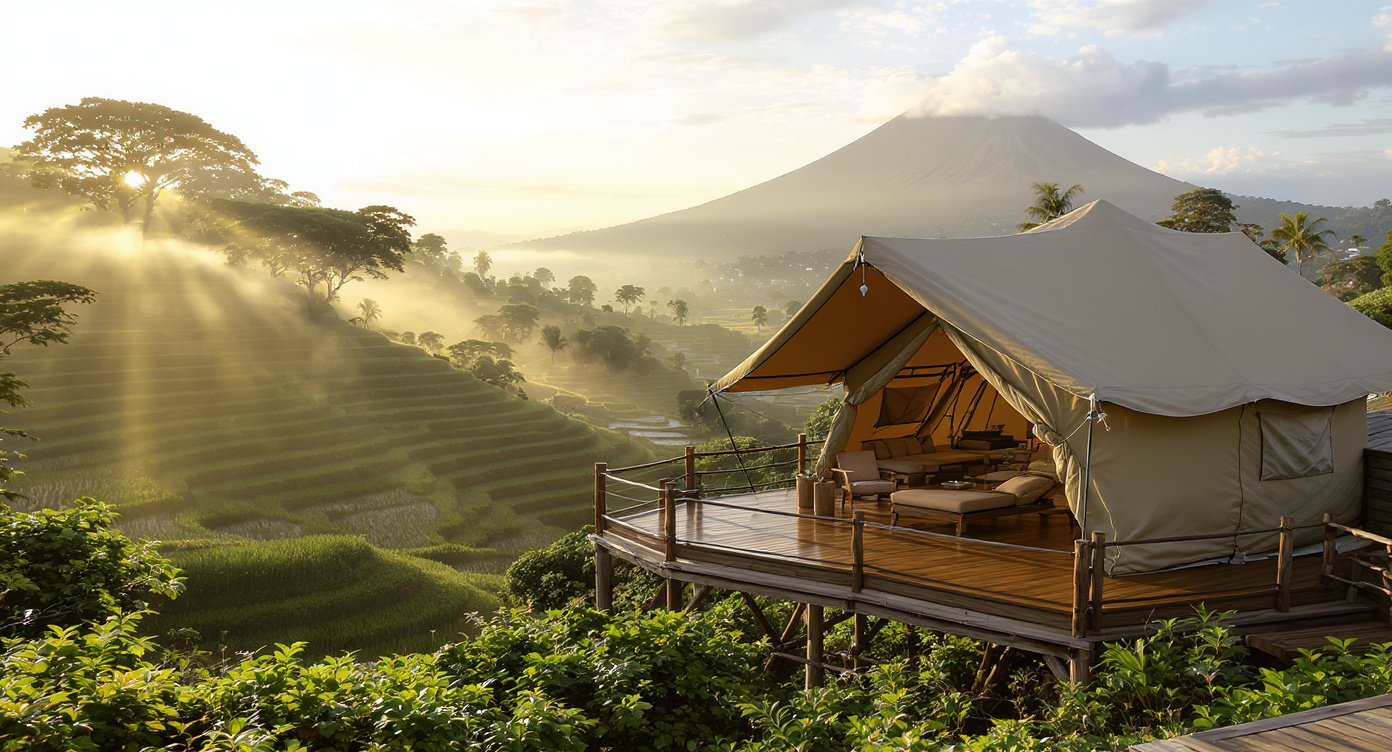
TeteBatu is where to start. At 600 metres on Rinjani’s southern slopes, the safari tents sit above the rice terraces — jungle fog rolls through at night, and on clear mornings between April and October the mountain fills the horizon from your deck. It’s the closest you can get to waking up on Rinjani without trekking it.
The camping isn’t the only reason to come. The village is surrounded by rice-field walking trails, the monkey forest with its black ebony monkeys, and the Jeruk Manis waterfall at the national park’s southern gate — all walkable or a short ride away, with local guides who grew up here. Nights drop to around 18°C — bring a layer.
7. Selong Belanak — beach camping without the sand in everything
Selong Belanak is a sweeping crescent bay in South Lombok with one of the island’s most forgiving beginner surf breaks. The safari tents here put you steps from the sand — you fall asleep to the waves the same as you would in a beach tent at Pantai Seger, then wake up in a real bed and order breakfast to your deck.
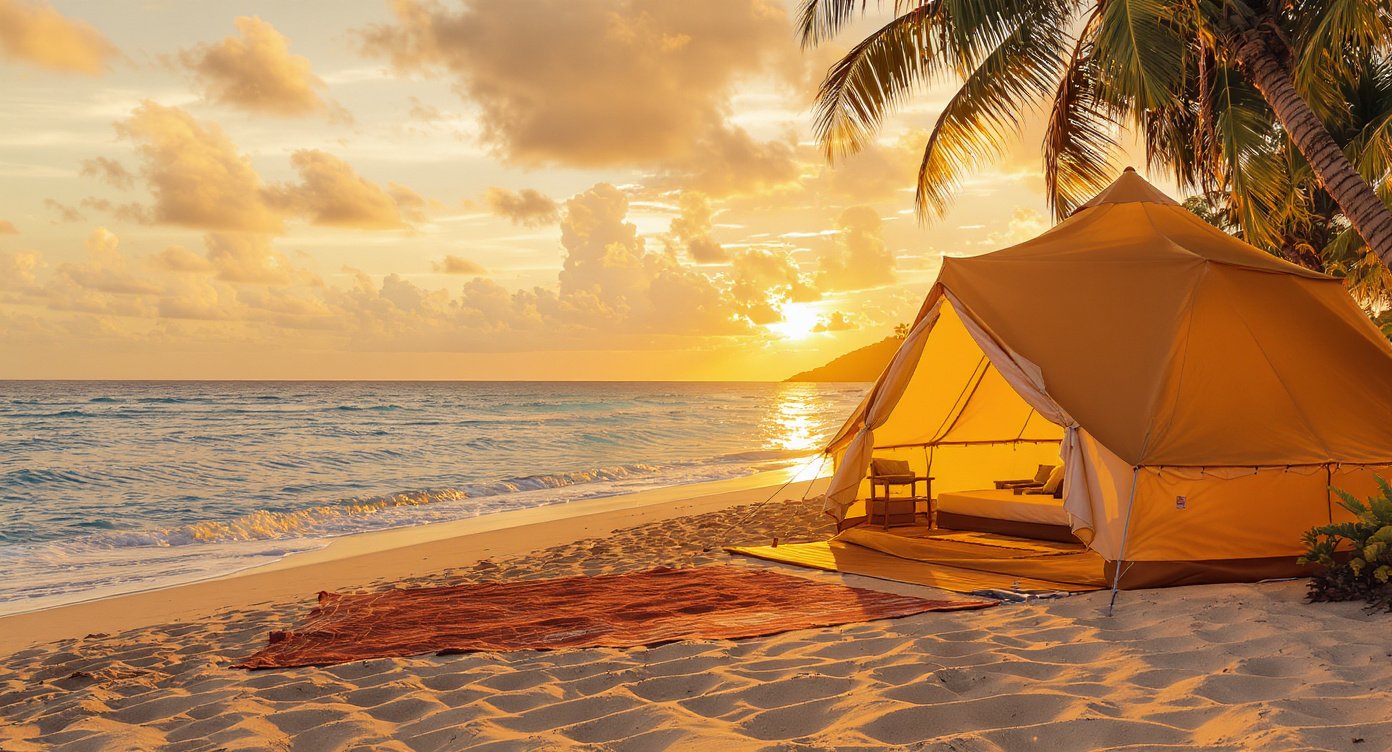
For surfers, this is the practical choice: board rental and surf lessons happen right on the bay, and the beach at sunset earns its reputation. For couples where one person loves camping and the other tolerates it, this is the compromise that doesn’t feel like one.
8. Gili Kondo — a private island campsite
Gili Kondo is a small island off Lombok’s east coast with a maximum of four safari tents on it — which means the campsite is, functionally, your own island. No shops, no restaurants beyond your included meals, no nightlife. The snorkelling starts at the beach: clear water, coral, turtles, and no crowds to share them with.
Of everything on this list, this is the spot that feels most like wild camping — total isolation, the sea in every direction — while asking the least of you. Boat transfers are weather-dependent and calmest April to October; we arrange the crossing for all guests.
Which camping spot fits you?
| You want | Go to |
|---|---|
| The summit trek and the crater-rim night | Rinjani via a registered operator (2D1N or 3D2N) |
| The full mountain experience, lake included | Rinjani 3D2N with a night at Segara Anak |
| A big view for a small effort | Pergasingan Hill |
| Wild beach camping, bring-your-own-gear | Pink Beach / Tanjung Ringgit or Pantai Seger |
| Rinjani views, rice terraces, and a real bed | TeteBatu |
| Surf, sand, and a hot shower | Selong Belanak |
| An island to yourself | Gili Kondo |
Practical notes before you go
Season. The dry season — April to October — is the window for all eight spots. Trails are open, seas are calm, and nights are rain-free. June through August is peak; book treks and tents four to six weeks ahead for those months.
Temperatures. Pack for the altitude you’re sleeping at. The Rinjani rim approaches freezing overnight, Pergasingan and TeteBatu are cool enough to want a layer, and the coast stays warm year-round.
Permits and closures. Rinjani requires a national park permit, booked through the park’s official system. The beach and hill camps need no permits — just self-sufficiency and the discipline to pack out what you pack in.
What’s included at the safari tents. Breakfast, linens and local guides for activities — the full list is on our FAQ, and the wider picture of how it all works is in our complete guide to glamping in Lombok.
Whichever version of camping in Lombok you choose — the freezing rim, the empty pink sand, or a queen bed behind canvas — the island rewards the night spent outside. If yours is the version with the hot shower, check availability and book your stay.